


After Hours Property Patrols That Prevent Loss
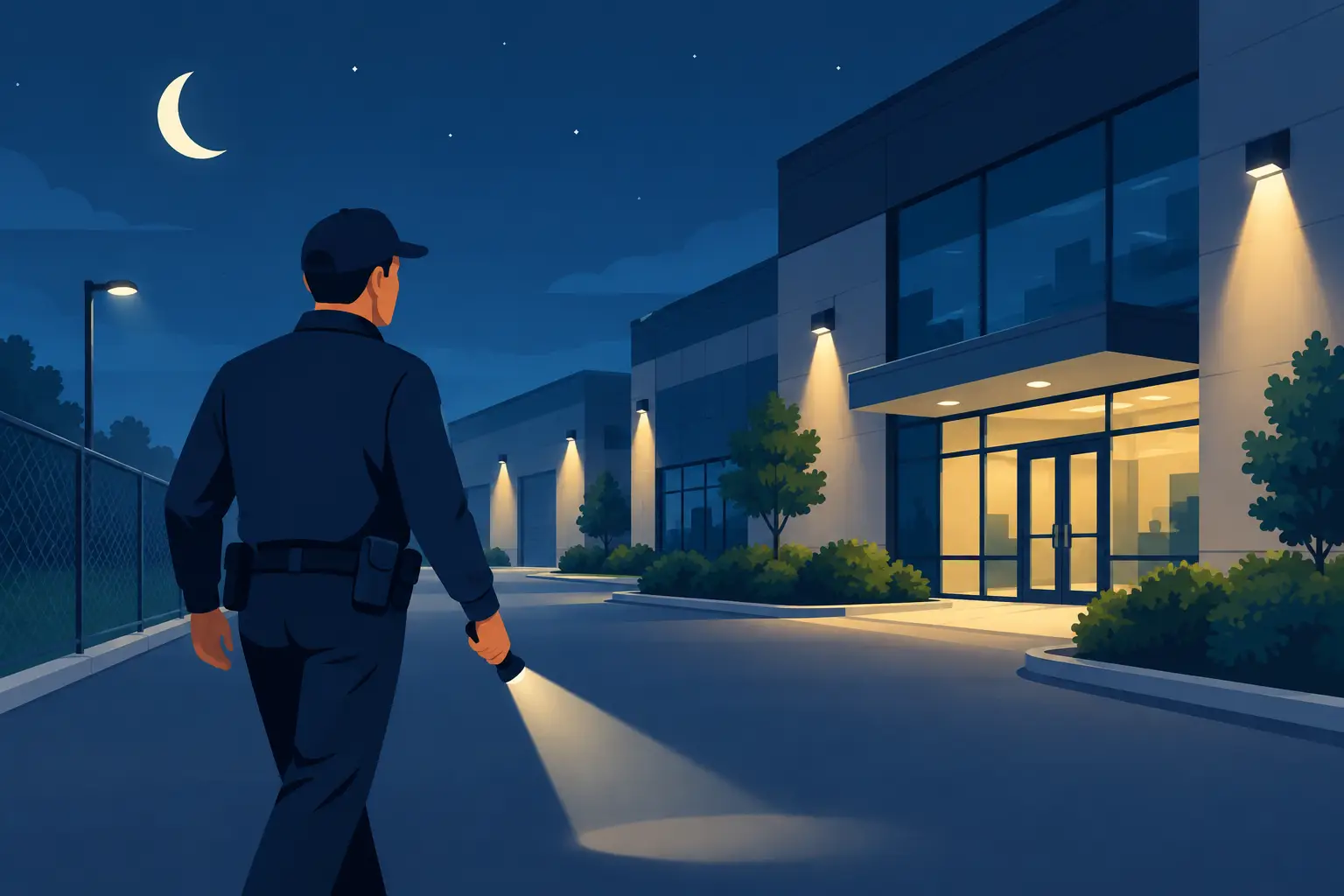
A locked gate, dark parking lot, or empty construction site can look like an opportunity to the wrong person. The most costly incidents often happen after staff, tenants, customers, and contractors have left. After hours property patrols put trained security personnel on-site when a property is most exposed, helping deter theft, vandalism, trespassing, and unsafe activity before a small issue becomes a major loss.
For property managers and business owners, the question is not simply whether a guard should walk the site at night. It is whether patrol coverage reflects the actual risks of the property: its layout, access points, valuable assets, surrounding activity, operating hours, and history of incidents. Effective patrols are planned, visible, accountable, and responsive.
Why Properties Face Greater Risk After Closing
Most commercial and residential properties become harder to supervise once regular operations end. Fewer employees are present to notice an open door, suspicious vehicle, broken fence panel, or person attempting to access a restricted area. Lighting may be limited in loading zones, stairwells, back lanes, storage yards, and parking areas. These gaps can create conditions that invite preventable losses.
Construction sites are particularly vulnerable because equipment, tools, copper wiring, fuel, and materials may remain outdoors or in temporary storage. A single theft can delay crews, interrupt schedules, create insurance complications, and force expensive replacement purchases. On retail and strip mall properties, concerns may include break-ins, loitering, illegal dumping, graffiti, or disturbances that affect tenants and customer confidence the following morning.
Hotels, multifamily communities, and office buildings face a different mix of risks. Guests and residents expect a secure environment, while management needs professional support for access concerns, noise complaints, unauthorized visitors, parking issues, and suspicious behavior. Government and commercial facilities may require closer control of exterior grounds, entrances, sensitive areas, and after-hours contractors.
A patrol presence does not eliminate every risk. It does make a property less attractive to opportunistic offenders and provides a trained set of eyes when management is off-site.
What Effective After Hours Property Patrols Look Like
A useful patrol program is more than a vehicle passing through a parking lot at a predictable time. Predictable patterns can be easy to observe and avoid. Strong coverage combines visible deterrence with purposeful inspections and clear reporting.
Patrol officers should check the areas most likely to be targeted, including gates, doors, windows, fencing, loading areas, equipment storage, dumpsters, utility rooms, parking lots, and perimeter lines. They should look for signs that conditions have changed: damaged locks, cut fencing, forced entry, unapproved vehicles, safety hazards, water leaks, fire concerns, or people who should not be on the premises.
The best frequency depends on the property. A small office building with limited exterior exposure may benefit from scheduled checks during its highest-risk hours. A construction site with valuable equipment, repeated theft attempts, or weak perimeter conditions may require more frequent patrols or a dedicated on-site guard. Large properties often need a combination of mobile patrols, alarm response, and targeted checks at vulnerable locations.
Visibility matters, but professionalism matters just as much. Guards must know when to observe, document, communicate, and contact emergency services. They should not create unnecessary confrontation or take risks that escalate a situation. Their role is to protect people and property through sound judgment, presence, and disciplined response.
Randomized Timing Creates a Stronger Deterrent
A patrol schedule should not be so rigid that unauthorized visitors can plan around it. Varying patrol times within agreed service windows makes coverage harder to predict while still ensuring the property receives consistent attention.
Randomization is especially useful for sites that have experienced recurring issues, such as late-night trespassing, material theft, vehicle break-ins, or illegal dumping. It can also help identify patterns. If the same vehicle appears near a gate several nights in a row, documented observations give management and law enforcement more useful information than a vague report of suspicious activity.
Reporting Turns Patrols Into Accountability
A patrol without documentation leaves the client guessing whether the work was completed and what was found. Clear reports create accountability and help property managers make better decisions.
A useful report records patrol times, areas checked, observations, incidents, actions taken, and any recommendations for follow-up. Photographs may be appropriate when documenting damage, unsecured access points, hazards, or suspicious conditions. Over time, these reports can reveal recurring weaknesses, such as a gate that does not latch, poor lighting near a rear entrance, or a loading area that attracts unauthorized activity.
Matching Patrol Coverage to the Property
There is no single patrol plan that fits every property. The right approach begins with an honest site assessment rather than a generic promise of overnight security.
For a construction project, the focus may be on perimeter checks, equipment areas, temporary power installations, trailers, and deliveries that occur outside standard hours. A guard may verify that gates are secured, inspect for cut fences, check parked machinery, and report any signs of tampering. If the site is large or the losses are significant, stationary guard coverage can provide a stronger level of protection than intermittent patrols alone.
For retail centers and strip malls, patrols may focus on storefronts, rear service corridors, parking lots, garbage enclosures, vacant units, and tenant access concerns. A professional officer can provide a visible presence that reassures legitimate visitors while addressing issues before they disrupt the property or its tenants.
For residential communities, the emphasis may shift to visitor access, parking enforcement support, common areas, package rooms, garages, and noise or disturbance concerns. The guard’s conduct is especially important in these settings. Residents need security that is attentive and respectful, not needlessly intrusive.
Hotels require a balance of guest service and security awareness. Patrol officers may monitor entrances, parking areas, hallways, restricted spaces, and event activity while working closely with hotel staff. Their presence should support a calm, well-managed environment without making guests feel uncomfortable.
Patrols Work Best With Physical Security and Technology
After-hours security is strongest when guards are not expected to compensate for every physical weakness on a property. Patrols should support, not replace, effective locks, fencing, lighting, cameras, access control, and alarm systems.
For example, a camera can capture activity at a gate, but a patrol officer can inspect whether the gate was damaged, determine whether someone remains on-site, and take appropriate next steps. An alarm may signal an attempted entry, but a trained guard can respond, assess the scene, protect the area, and provide a clear report to management. Technology provides information; professional personnel provide judgment and action.
Site improvements can also make patrol coverage more efficient. Trimming vegetation near entrances, repairing damaged fencing, improving exterior lighting, marking restricted areas, and keeping valuable materials out of easy view can reduce opportunities for theft and concealment. These measures do not have to be expensive to be effective, particularly when they address a documented vulnerability.
Questions to Ask Before Hiring a Patrol Provider
The provider should be able to explain how it will assess your site, schedule patrols, train assigned personnel, verify completed visits, and communicate incidents. Ask whether guards are licensed, background-checked, insured, and bonded. Ask who responds when a situation requires escalation and how reports are delivered to your team.
It is also reasonable to ask how the provider handles changes. A property’s security needs can shift quickly after a break-in, a tenant move-out, a construction phase change, or a seasonal increase in activity. A dependable security partner should be able to adjust coverage rather than forcing the property into a fixed package that no longer fits.
Live Guard Security approaches patrol planning with the conditions of the site in mind, including the people who use it, the assets at risk, and the hours when exposure is highest. That local, hands-on assessment is what turns guard coverage from a routine expense into a practical layer of loss prevention.
The right patrol plan gives managers more than overnight coverage. It gives them documented oversight, a faster path to response, and the confidence that someone is actively watching the property when it cannot watch itself.
Need security guards in the Lower Mainland?
Live Guard Security Ltd provides licensed guards, mobile patrols and alarm response across Surrey, Vancouver, Burnaby and the rest of the Lower Mainland, 24 hours a day.
Get a free quote