
Crowd Management Security Guards for Safer Events
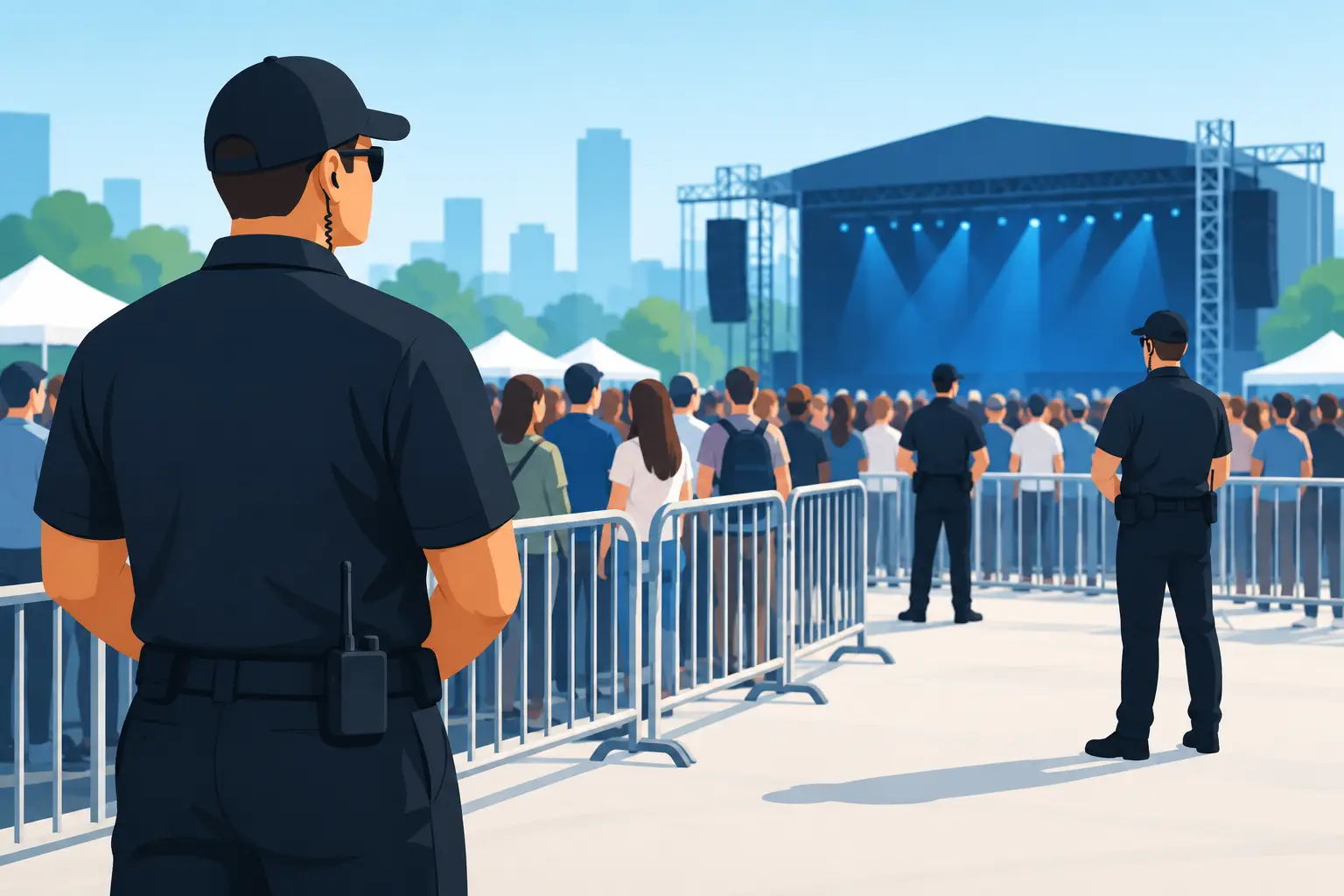
A crowd can shift from orderly to unsafe in minutes. A delayed entry line, an unclear exit route, an argument near a bar, or a sudden rush toward a stage can put guests, staff, and property at risk. Crowd management security guards provide the visible direction, calm communication, and rapid intervention needed to keep an event moving safely without making the environment feel unwelcoming.
For event managers, property operators, and business owners, crowd control is not simply about placing guards at doors. It is a site-specific safety function that protects access points, manages pedestrian flow, identifies developing problems, and supports emergency procedures. The right coverage depends on the venue layout, expected attendance, guest profile, alcohol service, time of day, and the practical risks surrounding the location.
What Crowd Management Security Guards Do
Professional crowd management begins before guests arrive. Guards need a clear understanding of the site, event schedule, staffing plan, restricted areas, emergency exits, and the client’s expectations for guest service. When personnel know the operation, they can prevent many disruptions before they become incidents.
At entry points, guards may verify credentials, enforce capacity limits, inspect bags where appropriate, and communicate prohibited-item policies. Their presence also discourages gate-crashing, theft, and unauthorized access to backstage, staff-only, or VIP areas. Just as importantly, they set the tone. Clear, respectful directions at the door reduce confusion and unnecessary confrontations later in the event.
Inside the venue, guards monitor congestion, keep aisles and exits clear, watch for disruptive behavior, and assist guests who need directions or support. They coordinate with event staff, parking attendants, venue management, and emergency responders when conditions require it. Effective crowd management is active, not passive. Guards should be positioned where they can see and respond, rather than being assigned to a location with no operational purpose.
The Risks That Build in Large Gatherings
Most crowd-related incidents do not begin as dramatic emergencies. They start with smaller operational gaps: a queue that blocks a sidewalk, poor signage near an exit, guests moving against the intended flow, or an understaffed access point. Left unaddressed, those gaps create frustration, reduce visibility, and make it harder for staff to respond quickly.
Alcohol service, competitive events, high-profile appearances, cash handling, and late-night departures can increase the likelihood of conflict. A large public event may also attract people who have no connection to the event itself but see an opportunity for theft, disorderly conduct, or unauthorized entry. Security planning must account for what happens outside the doors as well as what happens on the event floor.
Venue type matters. A hotel function room, retail center promotion, concert, community festival, construction-site open house, and corporate gathering each create different movement patterns and security concerns. A one-size-fits-all guard assignment can leave critical areas uncovered while placing too much attention on low-risk locations.
Build the Plan Around the Site
A reliable crowd management plan starts with a site assessment. Before assigning guards, the security provider should review the physical layout, entrances and exits, parking areas, gathering points, lighting, visibility, nearby public access, and any areas where people may become compressed or confused.
The assessment should also establish who is responsible for decisions during the event. Security personnel need clear escalation contacts for the event manager, venue representative, medical support, and police or fire response. When an issue develops, uncertainty over authority can cost valuable time.
A practical plan addresses four connected areas:
- Entry and screening: Determine where guests arrive, how lines will be organized, what credentials are required, and how capacity will be monitored.
- Movement and visibility: Identify paths to seating, restrooms, concessions, elevators, parking, and exits, then position guards where congestion or conflict is most likely.
- Restricted access: Protect cash rooms, equipment areas, control rooms, green rooms, loading zones, staff areas, and any VIP or executive spaces.
- Exit and dispersal: Plan for the end of the event, when guests leave at once and risks can move into parking lots, sidewalks, and nearby businesses.
This level of preparation does not mean every event requires a large security team. A smaller gathering may need only a few well-placed, properly briefed guards. A high-attendance event with multiple entrances, alcohol service, public parking, or a recognizable guest may need layered coverage and a supervisor to coordinate the operation. The appropriate level of security depends on the real conditions, not a standard package.
Calm Communication Prevents Escalation
A security guard’s ability to communicate can be as important as physical positioning. Guests are more likely to cooperate when expectations are delivered clearly and respectfully. Simple directions such as where to line up, where to exit, or why an area is restricted can prevent the kind of frustration that leads to arguments.
When a guest becomes disruptive, experienced guards look for early opportunities to separate the person from the crowd, lower the temperature, and involve venue management when appropriate. A professional response is firm without being provocative. It protects the broader event experience while treating people with dignity.
De-escalation is not the same as ignoring a problem. Threats, violence, suspected weapons, severe intoxication, or repeated refusal to follow lawful directions require prompt action under established procedures. Licensed, trained guards know when to contain an issue, when to request additional support, and when police or emergency services must be contacted.
Technology Supports the Guard Presence
Technology can strengthen crowd management when it is used to support trained personnel, not replace them. Cameras can help monitor entrances, parking lots, and high-traffic areas. Access-control systems can limit entry to sensitive rooms. Radios allow guards and event personnel to communicate without creating public alarm.
Still, cameras do not redirect a growing line, assist a guest who feels unwell, or recognize the tension building between two groups before it turns into a confrontation. On-site guards bring judgment and immediate action. They can use information from cameras and site systems to respond faster, but they remain the visible point of control and reassurance.
For larger or higher-risk events, a command structure is useful. A supervisor can receive reports, redeploy personnel, maintain communication with the client, and document incidents while field guards remain focused on guests and active areas. That structure is particularly valuable when conditions change quickly, such as weather disruptions, delayed programming, or unexpected attendance levels.
What to Look for in a Security Provider
Event security should be selected on more than guard numbers or an hourly rate. A low-cost assignment can become expensive if guards are not properly screened, licensed, trained, insured, or briefed for the site. The provider should be able to explain how it assesses risks, assigns personnel, communicates during an event, and handles incident reporting.
Ask whether guards have experience with your specific environment. Retail plaza events require attention to customer access, tenant operations, and parking flow. Hotel events demand discretion and guest-service awareness. Public-facing festivals require a different approach than a controlled corporate function. Specialized needs, including executive protection or sensitive government facilities, call for additional planning and clearly defined protocols.
Live Guard Security approaches coverage with the site, the people, and operating conditions in mind. For clients across Surrey, Vancouver, and surrounding communities, that means designing an on-site plan around the risks that actually affect the property or event rather than assigning guards by default.
Keep the Guest Experience in View
Strong security should be noticeable without becoming the main event. Guests should see clear access control, feel supported when they need assistance, and understand that staff are prepared if something goes wrong. At the same time, the operation should preserve the purpose of the gathering, whether that is welcoming customers, hosting residents, celebrating a milestone, or running a public event.
The most effective crowd management security guards create order before disorder has a chance to take hold. With a thoughtful plan, qualified personnel, and active communication, event teams can protect people and property while giving guests a safer reason to stay, participate, and return.
Need security guards in the Lower Mainland?
Live Guard Security Ltd provides licensed guards, mobile patrols and alarm response across Surrey, Vancouver, Burnaby and the rest of the Lower Mainland, 24 hours a day.
Get a free quote