

Security Guards for Gated Communities That Work
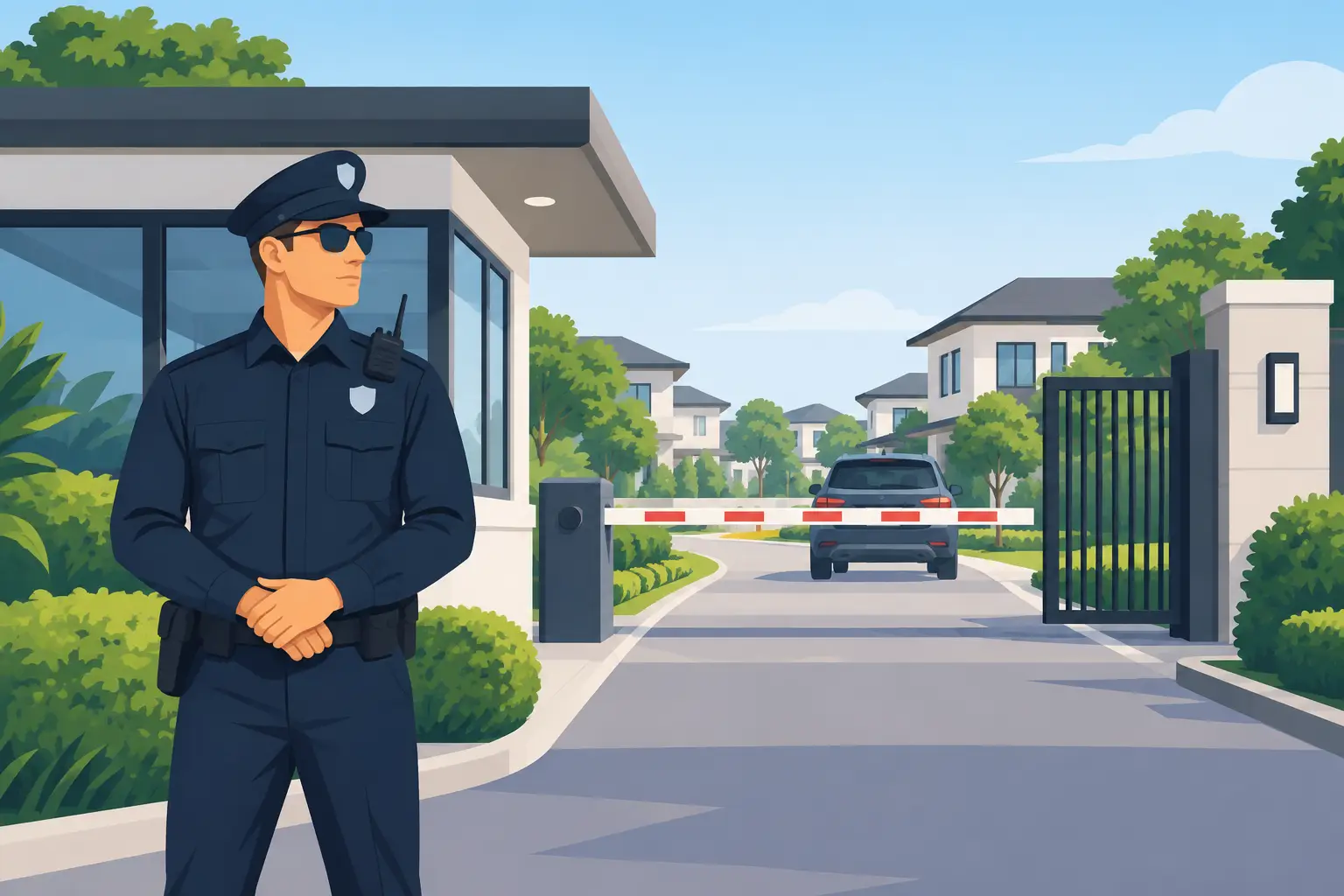
A gate is a point of control, not a complete security plan. Residents expect it to limit unauthorized access, but gates can be tailgated, left open, damaged, or bypassed by someone who knows the property’s routines. Security guards for gated communities add the judgment, visibility, and immediate response that automated access systems cannot provide on their own.
For property managers, strata councils, and residential community leaders, the goal is not to make a neighborhood feel restricted. It is to protect residents, visitors, common areas, vehicles, and the community’s reputation while keeping daily arrivals and departures orderly. The right guard program does that quietly, professionally, and with clear accountability.
Why Gated Communities Still Need On-Site Security
A controlled entrance reduces casual access, but it does not remove risk. Delivery drivers, contractors, guests, service providers, and residents all move through the property each day. A gate operator, key fob system, or video intercom can record an entry, yet it may not identify suspicious behavior or respond when a problem is unfolding.
Common concerns vary by community. Some properties experience package theft, vehicle break-ins, garage intrusions, vandalism, or unauthorized use of amenities. Others need help managing traffic at a busy entrance, enforcing visitor procedures, or addressing disruptive behavior before it escalates. Larger communities may also have several access points, walking paths, parking structures, and shared facilities that cannot be watched effectively from one camera view.
A professional guard provides a visible presence at the moments and locations where it matters most. That presence can discourage opportunistic crime, give residents a reliable point of contact, and ensure suspicious activity is assessed rather than simply recorded for review later.
What Security Guards for Gated Communities Actually Do
Effective residential security is more than sitting at a gatehouse. Guards need a defined assignment built around the property’s layout, resident expectations, operating hours, and known risks. Depending on the community, coverage may include access control, scheduled patrols, mobile checks, incident response, and coordination with management or emergency services.
At the entrance, guards can verify visitors according to approved community procedures, monitor contractor access, maintain visitor logs, and watch for tailgating or attempted unauthorized entry. Their role should be courteous and consistent. Residents should not have to argue about who is allowed in, while visitors should understand that entry procedures are applied fairly.
During patrols, guards check more than doors and fences. They look for open gates, damaged lighting, unsecured storage areas, unfamiliar vehicles, loitering, signs of trespass, fire hazards, and conditions that could create liability for the property. In parking areas, they may identify broken glass, vehicle tampering, or safety concerns that need quick attention.
The best guard reports are useful operational records, not vague notes. Time-stamped patrol observations, access incidents, photos when appropriate, and documented actions help managers identify patterns. If a side gate is repeatedly propped open or theft reports increase in one parking section, the community can make a targeted correction instead of guessing.
Build Coverage Around Real Community Risks
There is no single guard schedule that fits every gated property. A small residential development with one entrance may need evening patrols and alarm-response support. A large condominium community with underground parking, amenity spaces, multiple gates, and active construction nearby may need dedicated coverage during high-traffic periods and overnight mobile patrols.
A site assessment should come before staffing decisions. This review considers the number of entrances, traffic flow, blind spots, lighting, existing cameras, parking layout, shared amenities, delivery volume, prior incidents, and nearby activity. It should also consider the community’s culture. A family-oriented neighborhood, a luxury high-rise, and an active adult community may have different expectations for guard interaction and visibility.
Coverage timing matters as much as coverage quantity. Some communities face more issues after midnight, while others see pressure around school drop-off, contractor arrivals, or evening guest traffic. Assigning a guard when residents are already awake and active may offer less value than focused coverage during a known vulnerability window.
Balance Security With Resident Experience
Residential guards represent the property every time they interact with a resident or guest. Professional conduct is essential. Guards must be alert without being confrontational, able to explain procedures without escalating frustration, and prepared to use sound judgment when a situation does not fit a simple rule.
That balance starts with clear post orders. Management should establish how guests are verified, how deliveries are handled, when guards contact residents, what issues require immediate escalation, and how privacy is respected. Guards should not improvise community policy at the gate.
It also helps to communicate the purpose of security to residents. When residents understand that guards are there to help protect people and property, report hazards, and maintain controlled access, they are more likely to cooperate with visitor procedures. A good security presence should make residents feel supported, not monitored in their own homes.
Technology Supports Guards, but Does Not Replace Them
Cameras, license plate systems, access control, alarm monitoring, and visitor-management tools all strengthen a security program. They can extend visibility across a property and provide valuable evidence after an incident. Yet technology has limits. A camera may show a person testing car doors, but it cannot approach the individual, assess the situation, or call for assistance based on what is happening in real time.
The strongest approach combines trained personnel with the technology already in place. Guards can monitor alerts, conduct physical checks when a camera view is unclear, identify recurring equipment problems, and report security gaps such as blocked cameras or poor lighting. They also provide a human response during alarms, resident concerns, and disturbances that require calm communication.
For communities considering new equipment, it is worth asking whether the technology solves a specific issue. More cameras are not automatically better if the property has no process for reviewing alerts or responding to what they capture. A guard plan gives technology a practical operating purpose.
What to Look for in a Security Provider
Residential communities should expect more than a generic guard assignment. The provider should be willing to learn the property, understand the priorities of management and residents, and recommend coverage that fits the actual operating environment.
Verify that guards are properly licensed, background-checked, trained, bonded, and insured. Ask how the provider supervises assignments, handles missed shifts, documents incidents, and responds when a guard needs support. Continuity matters in residential settings because guards who understand the property’s access procedures, recurring concerns, and management contacts can make better decisions.
It is also reasonable to ask how the provider prepares guards for de-escalation, emergency response, report writing, and customer service. A residential assignment requires all of these skills. A guard may need to manage a heated visitor dispute one moment and assist a concerned resident the next.
Live Guard Security Ltd approaches gated community protection through site-specific planning, qualified personnel, and coverage that can adapt as risks or operating needs change. For properties across Surrey, Vancouver, and surrounding municipalities, local familiarity supports faster coordination and more practical recommendations.
Make Reporting and Escalation Part of the Plan
A guard program should give property management useful oversight without creating unnecessary administrative work. Agree on the reporting process before coverage begins. Routine activity may be logged in daily reports, while safety issues, access violations, property damage, and incidents involving police or emergency services should be escalated promptly.
Clear escalation procedures protect everyone involved. Guards need to know when to contact a manager, when to call emergency services, and when to preserve the scene and document observations. Management needs to know who is available after hours and what information will be provided following an incident.
Regular reviews keep the program effective. A monthly discussion of incident trends, patrol findings, resident feedback, and equipment concerns can reveal whether coverage hours or procedures should change. Security is most effective when it responds to conditions on the property rather than following a schedule that no longer matches the risk.
A well-run gated community should feel welcoming to the people who belong there and difficult to exploit for those who do not. The right on-site security program helps create that confidence through consistent access control, visible patrols, professional reporting, and people prepared to act when a situation requires attention.
Need security guards in the Lower Mainland?
Live Guard Security Ltd provides licensed guards, mobile patrols and alarm response across Surrey, Vancouver, Burnaby and the rest of the Lower Mainland, 24 hours a day.
Get a free quote